Every business decision carries risk. Whether it is launching a new product, adjusting inventory levels, or planning a marketing campaign, the outcome depends on how well a company can anticipate what lies ahead. Historically, businesses relied on spreadsheets, gut instinct, and basic trend analysis to make these calls. But as markets grow more volatile and data volumes explode, those traditional methods fall short.
This is where AI forecasting for businesses enters the picture. By using machine learning algorithms and advanced data analysis, AI forecasting enables companies to predict future outcomes with far greater accuracy than manual methods allow. From demand planning and revenue projections to supply chain optimization, AI-driven predictions help organizations act proactively rather than reactively.
In this guide, we break down what AI forecasting actually involves, the methods that power it, how to implement it step by step, and why it has become a competitive necessity for modern enterprises.
What is AI Forecasting for Businesses?

AI forecasting for businesses refers to the use of artificial intelligence — specifically machine learning models and predictive analytics — to analyze historical and real-time data, identify patterns, and generate predictions about future events. These predictions can cover a wide range of business functions, including sales performance, customer demand, market trends, cash flow, and operational efficiency.
Unlike traditional forecasting, which typically relies on static statistical models and requires manual input from analysts, AI-based forecasting continuously learns from new data. The models refine themselves over time, adapting to shifting market conditions and improving prediction accuracy with each iteration.
For example, an e-commerce company can use AI forecasting to predict which products will see a surge in demand during a particular season. A logistics firm might use it to anticipate delivery delays based on weather patterns and route congestion data. The common thread is that AI processes far more variables, far more quickly, than any human analyst could manage on their own.
This capability is central to enterprise AI strategies, where the goal is to embed intelligent decision-making across every layer of an organization.
Why AI Forecasting Matters for Business Growth
Forecasting has always been important. What makes AI forecasting different is the scale, speed, and adaptability it brings to the process. Here is why it matters:
Faster processing of complex data: Modern businesses generate enormous volumes of data from sales transactions, website traffic, customer interactions, social media, IoT sensors, and more. AI algorithms can ingest and analyze these diverse data streams simultaneously, identifying correlations that manual analysis would miss entirely.
Improved prediction accuracy: Machine learning models detect subtle, nonlinear patterns in data that rule-based statistical models cannot capture. This leads to more precise demand forecasts, revenue projections, and risk assessments. As models train on more data, their accuracy improves further.
Proactive decision-making: Rather than reacting to market shifts after they happen, AI forecasting gives businesses early warning signals. Whether it is a dip in customer retention rates or an upcoming spike in raw material costs, early detection allows companies to adjust their strategies before problems escalate.
Scalability: AI forecasting models can be applied across departments — from marketing and sales to finance and operations — without proportionally increasing headcount. A single forecasting system can serve multiple business units, each with its own set of prediction requirements.
Companies that are serious about long-term growth increasingly view AI forecasting as a core element of their digital transformation strategy, rather than an optional add-on.
Key Methods Behind AI Forecasting
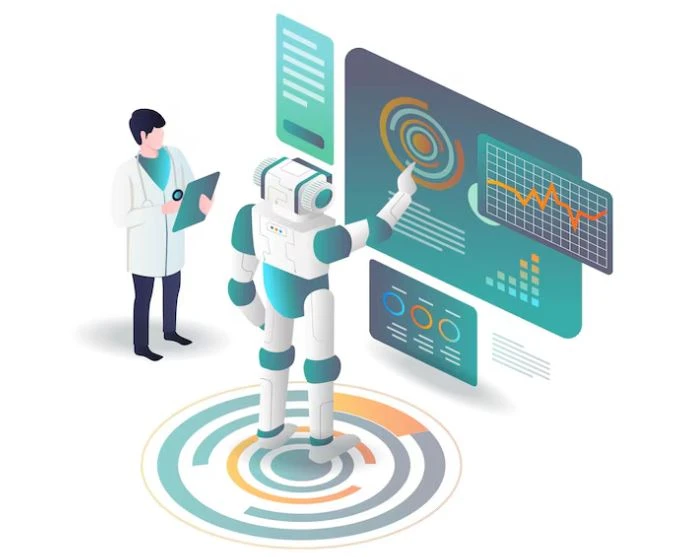
AI forecasting is not a single technique. It draws on several methods, each suited to different types of data and prediction tasks. Understanding these methods helps businesses choose the right approach for their specific needs.
Time Series Analysis
Time series forecasting is one of the most widely used methods in business AI. It involves analyzing sequential data points collected over time — daily sales figures, monthly revenue, hourly website traffic — to identify trends, seasonal patterns, and cyclical behavior.
Traditional statistical approaches like ARIMA (Autoregressive Integrated Moving Average) have long been used for time series analysis. However, modern AI approaches use deep learning architectures such as Long Short-Term Memory (LSTM) networks and Transformer models, which handle complex, multi-variable time series data more effectively. These models excel at capturing long-range dependencies in data, making them ideal for forecasting scenarios where patterns stretch over weeks or months.
Regression and Classification Models
Regression models predict continuous outcomes — such as expected revenue or projected customer lifetime value — based on input variables. Classification models, on the other hand, sort data into categories, helping businesses predict whether a customer will churn, whether a transaction is fraudulent, or which market segment a new product will appeal to.
Gradient boosting algorithms like XGBoost and LightGBM are particularly popular in business forecasting because they deliver strong performance on tabular data, which is the most common data format in enterprise settings.
Neural Networks
Neural networks are machine learning models inspired by the structure of the human brain. They consist of interconnected layers of nodes (neurons) that process input data and learn to recognize patterns through training. Deep neural networks, with multiple hidden layers, can model highly complex relationships in data.
In forecasting, neural networks are particularly useful when dealing with unstructured or semi-structured data — images, text, sensor readings — where traditional statistical methods struggle. They are also the foundation of foundation models like Amazon Chronos and Google TimesFM, which have emerged as pre-trained forecasting models capable of making predictions on entirely new datasets without task-specific training.
Clustering
Clustering algorithms group similar data points together based on shared characteristics. While clustering is not a forecasting method on its own, it plays an important supporting role. By segmenting customers, products, or markets into distinct groups, businesses can apply targeted forecasting models to each cluster, improving overall prediction accuracy.
For instance, a retailer might cluster its product catalog by demand patterns — fast-moving items, seasonal goods, and slow sellers — and apply different forecasting models to each group for more precise inventory planning.
How to Implement AI Forecasting in Your Business
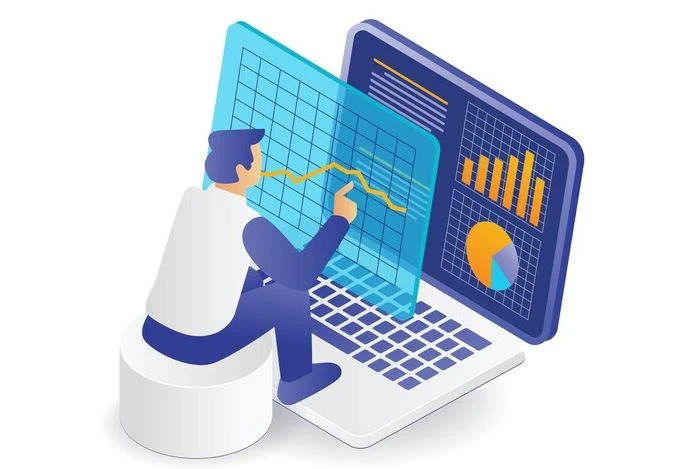
Implementing AI forecasting is a structured process. Rushing into model deployment without preparation leads to poor predictions and wasted investment. Here is a practical roadmap:
Step 1: Define Clear Objectives
Start by identifying the specific business problems you want forecasting to solve. Are you trying to reduce excess inventory? Predict quarterly revenue more accurately? Anticipate customer churn before it happens? Each objective requires a different type of model, different data inputs, and different success metrics.
Vague goals like “use AI to improve the business” lead nowhere. The more specific the objective, the easier it is to measure whether your forecasting system is delivering value.
Step 2: Collect and Prepare Quality Data
AI models are only as good as the data they train on. Before building any forecasting system, audit your existing data sources. Ensure that historical records are complete, consistent, and free of major errors. Common data preparation steps include removing duplicate entries, handling missing values, normalizing formats, and enriching internal datasets with relevant external sources like economic indicators or weather data.
Organizations that invest in big data consulting at this stage often see significantly better forecasting outcomes, because clean, well-structured data is the foundation everything else builds on.
Step 3: Choose the Right AI Tools and Algorithms
Not every forecasting problem requires a deep neural network. For straightforward demand forecasting with clean historical data, gradient boosting or even well-tuned ARIMA models can perform excellently. For more complex scenarios involving multiple data streams and nonlinear relationships, deep learning approaches like LSTMs or Transformer-based models are more appropriate.
The choice also depends on your team’s technical capabilities and infrastructure. Off-the-shelf AI forecasting platforms like Google Cloud AI, AWS Forecast, and Azure Machine Learning offer managed services that reduce the engineering burden. For organizations that need tailored solutions, working with a team that can build AI software specific to their requirements is often the better path.
Step 4: Train, Validate, and Test Models
Once you have selected an algorithm and prepared your data, the model needs to be trained on historical data and validated against a held-out test set. This step ensures that the model generalizes well to new, unseen data rather than simply memorizing past patterns.
Cross-validation techniques — where the data is split into multiple training and testing subsets — help identify overfitting early. The goal is a model that performs consistently across different time periods and data segments.
Step 5: Deploy, Monitor, and Iterate
Deploying a forecasting model is not the end of the process. Models degrade over time as market conditions, customer behavior, and business operations evolve. Continuous monitoring is essential. Track prediction accuracy against actual outcomes, flag significant deviations, and retrain models periodically with updated data.
Building a feedback loop — where business teams report on the practical usefulness of forecasts — ensures that the system stays aligned with operational needs rather than becoming a disconnected technical exercise.
Common Use Cases of AI Forecasting Across Industries
AI forecasting is not limited to a single industry or function. Its applications span virtually every sector where data-driven decisions create competitive advantage.
Demand and sales forecasting: Retail and e-commerce businesses use AI to predict product demand at granular levels — by SKU, region, and time period — allowing for better inventory allocation and reduced stockouts or overstock situations.
Financial planning: Finance teams use AI models to forecast revenue, cash flow, and expenses. These predictions feed into budgeting processes and investment decisions, helping CFOs allocate capital more effectively.
Supply chain optimization: AI forecasting helps logistics and supply chain teams anticipate disruptions, predict lead times, and optimize procurement schedules. Companies that embed AI into their supply chain operations are better equipped to handle unexpected events, from port closures to raw material shortages.
Customer behavior prediction: Marketing and customer success teams use AI to predict churn risk, estimate customer lifetime value, and identify cross-selling opportunities. These predictions allow for targeted retention campaigns and personalized customer experiences.
Workforce planning: HR departments leverage AI forecasting to predict hiring needs, employee turnover, and seasonal staffing requirements. This is especially valuable in industries with variable demand, such as hospitality and logistics.
For a broader view of how AI is applied beyond forecasting, explore these artificial intelligence use cases across different industries.
Key Advantages of AI Forecasting for Businesses

The benefits of AI forecasting extend beyond just better predictions. Here are the most impactful advantages:
Higher prediction accuracy: AI models process more data, consider more variables, and detect more patterns than traditional methods. This translates directly into forecasts that are closer to actual outcomes, reducing costly planning errors.
Faster time to insight: What might take a team of analysts days or weeks to compile, an AI system can produce in minutes. This speed advantage is critical in fast-moving markets where delayed decisions carry real financial consequences.
Reduced operational waste: Accurate demand forecasting minimizes overproduction, excess inventory, and unnecessary resource allocation. For manufacturers and retailers, this directly improves margins.
Better risk management: AI models can identify potential risks — supply chain disruptions, market downturns, customer churn spikes — before they fully materialize, giving businesses time to prepare contingency plans.
Continuous improvement: Unlike static forecasting models that remain fixed until manually updated, AI systems learn continuously. Each new data point refines the model, making predictions incrementally better over time.
These advantages also extend to automating operational workflows. Companies that combine forecasting with AI business process automation often see compounding efficiency gains, as predictive insights trigger automated actions without human intervention.
Challenges to Consider Before Adopting AI Forecasting
While the benefits are significant, AI forecasting is not without challenges. Being aware of these upfront helps businesses set realistic expectations and avoid common pitfalls.
Data quality issues: AI models are sensitive to the quality of input data. Incomplete records, inconsistent formatting, and outdated datasets can lead to unreliable predictions. Investing in proper data governance is a prerequisite, not an afterthought.
Model interpretability: Complex models, particularly deep neural networks, can function as “black boxes” — they produce predictions but do not clearly explain why. In regulated industries like finance and healthcare, this lack of transparency can be a barrier to adoption.
Integration complexity: Connecting AI forecasting systems with existing business tools — ERP systems, CRM platforms, supply chain software — requires technical planning and often custom development work. Understanding the AI development cost upfront helps with budgeting and resource allocation.
Talent and expertise: Building and maintaining AI forecasting systems requires data science expertise that many organizations do not have in-house. Deciding whether to hire internally or partner with an external team is a strategic decision that affects long-term scalability.
Overreliance on models: AI forecasts should inform decisions, not replace human judgment entirely. Models can fail when faced with unprecedented events — a pandemic, a regulatory shift, a sudden geopolitical crisis — that fall outside their training data. The best results come from combining AI predictions with experienced human oversight.
Building a Data-Driven Forecasting Culture

Technology alone does not deliver results. The organizations that get the most out of AI forecasting are the ones that build a culture around data-driven decision-making.
This starts with ensuring that relevant teams — marketing, sales, operations, finance — have access to forecasting outputs and understand how to interpret them. A forecast that sits in a data science team’s dashboard but never reaches the people making day-to-day decisions is wasted effort.
Encourage cross-functional collaboration around forecasting data. When sales teams share ground-level market insights and operations teams flag supply constraints, these inputs can be fed back into the model, improving its accuracy. The most effective forecasting systems are not siloed technical projects. They are collaborative tools that connect analytical capability with operational reality.
Understanding the role of AI in product development can also help businesses see how forecasting fits into broader innovation cycles, from concept validation to market launch.
Frequently Asked Questions
| What is AI forecasting for businesses? AI forecasting for businesses is the use of artificial intelligence algorithms to analyze data and predict future trends or outcomes, aiding in strategic decision-making and planning. |
| What is the advantage of using AI forecasting for business growth? The advantage of using AI forecasting for business growth lies in its ability to provide accurate predictions based on data analysis, enabling informed decision-making for all types of businesses. |
| How AI forecasting can help in supply chain management? AI forecasting optimizes supply chain management by leveraging advanced algorithms to predict demand and enhance operational efficiency, thereby minimizing costs and maximizing responsiveness. |
Final Thoughts
AI forecasting for businesses is no longer an experimental technology reserved for tech giants. It is a practical, accessible tool that companies of all sizes can use to make better decisions, reduce waste, and stay ahead of market shifts. The methods are proven, the tools are available, and the competitive pressure to adopt is real.
The key to success lies not just in choosing the right algorithm or platform, but in building the organizational habits that turn predictions into action. Start with a clear objective, invest in data quality, select the right tools for your specific needs, and create feedback loops that keep your models sharp.
Businesses that commit to this process consistently — refining their data, retraining their models, and integrating forecasting into daily operations — are the ones that will extract real, sustained value from AI. The question is no longer whether to adopt AI forecasting, but how quickly you can make it a working part of your decision-making infrastructure.

Empower your digital initiatives with BariTechSol, a premier custom software development company. Our skilled team tailors cutting-edge solutions to your unique needs. Elevate your tech experience and stay ahead in the digital realm. Partner with BaritechSol and code the success of your next big idea.