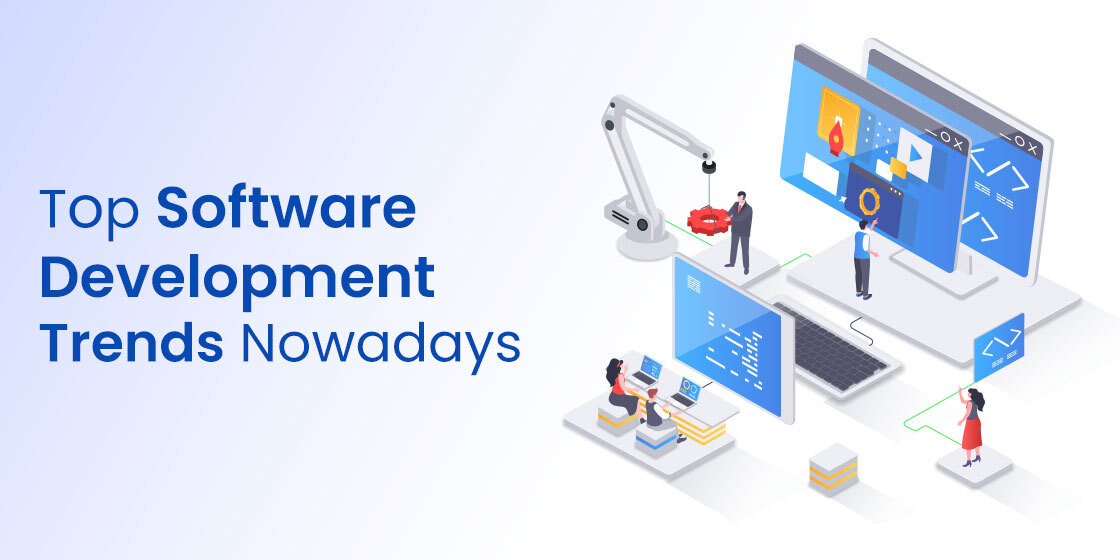
The software development industry is undergoing a structural transformation in how businesses build, deploy, and maintain software across every sector.
From agentic AI autonomously handling complex development tasks to cloud-native architectures becoming the standard infrastructure layer, the latest trends in software development are rewriting the rules of what is possible. Whether you are planning a digital transformation strategy or evaluating how to choose a software development company, understanding these current trends in software development is essential for making decisions that will hold up over the next three to five years.
This guide breaks down the most impactful software development trends driving the industry today, covering the most impactful shifts happening right now.
Why Following Software Development Trends Matters for Businesses

Software development is a vast field with constantly evolving technologies, methodologies, and best practices. At any given time, certain approaches gain traction because they solve real problems that businesses and consumers face. Mobile-first development became dominant because smartphones became the primary device for most users. Cloud computing surged because remote work demanded flexible, scalable infrastructure. AI-powered development tools rose because engineering teams needed to do more with fewer developers.
The trends covered in this guide are not speculative. They are grounded in real-world adoption patterns and measurable business outcomes. Following the right trends means building products that align with how modern users, infrastructure, and markets actually work. Ignoring them means competing with outdated tools against organizations that are not. For a deeper look at the foundations underpinning these shifts, our guide on types of software development provides useful context.
Agentic AI Is Redefining How Software Gets Built
Artificial intelligence has moved well beyond code autocomplete and chatbot interfaces. The defining software development trend right now is the rise of agentic AI: systems that can plan multi-step tasks, use tools and APIs, and execute actions toward a goal with minimal human supervision.
For development teams, this changes the daily workflow at a fundamental level. But unlike earlier code suggestion tools, agentic AI handles entire tasks: writing test suites, refactoring legacy code, managing deployment pipelines, and debugging in production environments. Organizations exploring how AI transforms software development should understand that this represents a fundamental shift in how engineering teams operate, not a marginal productivity boost.
How AI Is Changing the Software Development Process

The shift from AI as an assistant to AI as an autonomous agent is not just about writing code faster. It is fundamentally restructuring team roles, development workflows, and how organizations approach the entire software development lifecycle.
AI is also accelerating the adoption of AI-powered business process automation beyond the engineering team. Sales, marketing, operations, and customer service functions are all leveraging AI agents to automate routine tasks, freeing human workers to focus on judgment-intensive work. The technology is particularly valuable in enterprise AI deployments where organizations need to scale intelligent automation across multiple departments simultaneously.
Cloud-Native Architecture Has Become the Industry Standard
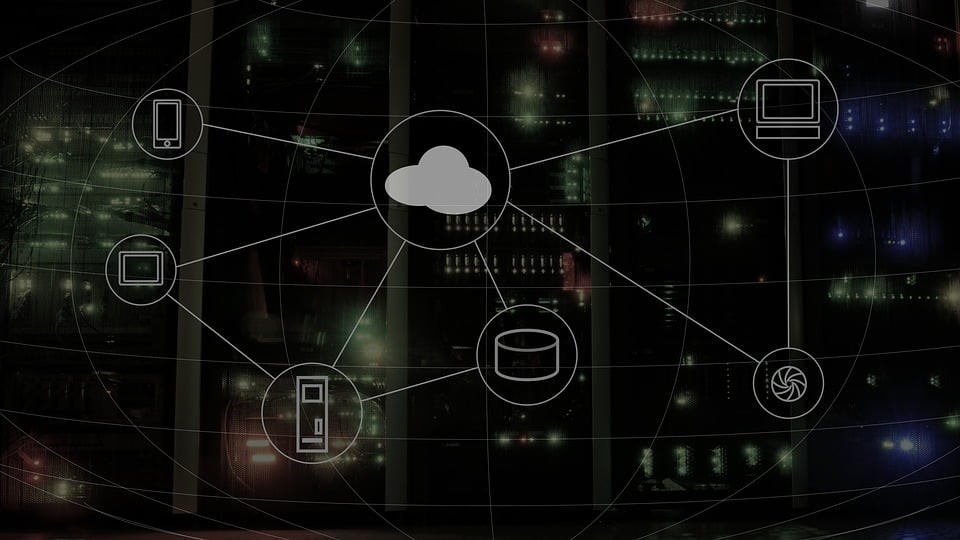
Cloud-native development is no longer an emerging trend. It has become the baseline architecture for modern software.
What has changed is the sophistication of the tooling. Containers, Kubernetes orchestration, and serverless functions have matured from experimental technologies into production-grade infrastructure. The cloud adoption framework that organizations follow today emphasizes multi-cloud strategies, with most enterprises now operating across multiple cloud providers for resilience and cost optimization.
Microservices architecture continues to underpin this shift. By decomposing applications into independently deployable services that communicate through APIs, development teams can scale, update, and maintain individual components without disrupting the broader system. This is especially valuable for enterprises pursuing application modernization or building IoT-connected platforms where uptime and flexibility are non-negotiable.
Why Cloud Computing Continues to Drive Software Innovation
Cloud computing’s appeal extends beyond simply hosting applications on remote servers. It provides the elastic infrastructure that makes modern software development trends possible. Without cloud, there is no cost-effective way to train AI models, no scalable backbone for IoT data processing, and no infrastructure flexible enough to support the rapid iteration cycles that agile software development demands.
The financial model of cloud computing remains one of its strongest advantages. Organizations can scale resources up during peak demand and scale back when activity drops, paying only for what they consume. This flexibility is particularly valuable for startups and mid-market businesses that cannot afford to over-provision hardware infrastructure. Cost management for AI workloads, however, is emerging as a distinct discipline, as AI costs are event-driven, difficult to forecast, and prone to significant variance.
Low-Code and No-Code Development Has Reached Enterprise Scale
The low-code and no-code movement has crossed a critical threshold. The growth is being driven by a practical reality: the global developer shortage. Low-code platforms have become the operational response to this talent crisis, allowing business analysts, operations managers, and other non-technical professionals to build functional applications without writing traditional code.
For software development agencies and custom development partners, this trend does not eliminate demand. It shifts the value proposition toward complex integrations, architecture design, governance frameworks, and the enterprise-grade solutions that citizen developers cannot build on their own.
DevSecOps and Zero-Trust Security Are Non-Negotiable
Security has stopped being a phase that follows development. The current trends in software development treat secure software development as a continuous practice embedded into every stage of the pipeline. DevSecOps, the integration of security into development and operations workflows, has evolved from a recommended practice into an operational requirement.
Rising breach costs and the drag of manual security reviews on release cycles have forced a shift. The response has been widespread adoption of automated security scanning tools such as Snyk, Checkmarx, and Veracode as standard CI/CD pipeline components. Regulatory frameworks including GDPR, ISO 27001, and SOC 2 increasingly require demonstrable DevSecOps practices.
Zero-trust security has undergone a parallel transformation. What was a buzzword is now a mandatory framework for public sector contracts and a prerequisite for cyber insurance coverage. The modern implementation goes beyond traditional perimeter defense. Systems continuously evaluate risk signals, including geographic location, device health, and behavioral biometrics, to verify every access request in real time.
For development teams, this means adopting practices like Software Bills of Materials (SBOMs), artifact signing, and policy-as-code using tools like Open Policy Agent. Security architecture, not just deployment speed, has become the primary focus of DevOps consulting engagements. The DevSecOps philosophy has shifted from ‘shift left’ to what practitioners now call ‘shift smart’, where AI-powered tools provide context-aware security feedback directly inside the developer’s IDE.
Edge Computing and IoT Are Powering Real-Time, Distributed Applications

The explosion of connected devices is driving one of the most significant trending software development technologies of this era: edge computing. Rather than routing all data to centralized cloud servers for processing, edge computing moves computation closer to where data is generated, reducing latency and enabling real-time decision-making.
This trend is especially critical for industries where milliseconds matter. In manufacturing, edge-enabled sensors drive predictive maintenance and real-time quality control. In healthcare, wearable devices process biometric data locally before transmitting only relevant insights to clinical systems. Autonomous vehicles, smart cities, and transportation networks all depend on edge architectures to function reliably.
For developers building IoT applications, this means optimizing AI models to run on constrained devices, designing for intermittent connectivity, and architecting systems that can operate independently when cloud access is unavailable. Understanding the underlying IoT architecture is critical for building systems that perform at production scale.
Cross-Platform Development Dominates Modern Mobile Strategy
The debate between native and cross-platform development has been effectively settled for most use cases. When evaluating a mobile app development strategy, cross-platform development significantly reduces time-to-market compared to maintaining separate native codebases.
For teams already working with JavaScript and TypeScript, React Native offers a natural migration path with the largest developer talent pool. For teams prioritizing visual fidelity and animation performance, Flutter provides a pixel-perfect experience across all platforms. A detailed comparison is available in our Angular vs React guide, which explores the broader framework selection process.
Blockchain and Web3 Expand into Enterprise Applications
Blockchain technology has matured beyond its cryptocurrency origins and is establishing itself as a legitimate software development trend across multiple industries. In finance, decentralized protocols power transparent settlement systems and programmable compliance. In supply chain management, blockchain provides immutable audit trails that regulators and consumers increasingly demand. In healthcare, it secures patient data sharing across providers while maintaining verifiable consent records.
Web3 development, which builds decentralized applications on blockchain infrastructure, is creating new models for digital ownership, identity verification, and data sovereignty. For fintech development teams, smart contracts automate processes that previously required intermediaries, reducing transaction costs and settlement times significantly.
While enterprise adoption remains selective, the underlying technology is now stable enough for production workloads. Organizations that previously dismissed blockchain as speculative are revisiting it as regulatory frameworks around digital assets and data provenance become clearer across major jurisdictions.
Software Development Outsourcing Has Evolved into a Strategic Capability
For startups and mid-market companies, outsourcing provides access to specialized skills in AI, cloud architecture, and security, the exact areas where the talent gap is most acute, without the overhead of building and maintaining full in-house teams. Different outsourcing models, from staff augmentation to dedicated teams and project-based engagements, allow businesses to match their engagement style to their specific needs and risk tolerance.
The key to successful outsourcing is choosing partners who understand the top trends in software development and can implement them effectively. Our guide on IT project outsourcing covers the essential criteria for evaluating potential partners.
Fuel innovation by leveraging bespoke software solutions. Get in touch with our team of experts to build cutting-edge software products.
Get a QuoteAPI-First Development Powers Scalable, Interoperable Systems
Modern applications depend on seamless connectivity between systems, and API-first development has emerged as the architectural philosophy of choice for building scalable digital products. Rather than treating APIs as an afterthought, this approach designs the API layer before building the user interface, ensuring that every service can communicate, integrate, and extend cleanly. This is especially critical in web application architecture where microservices, third-party integrations, and mobile clients all depend on well-designed API contracts.
Strong API ecosystems support faster product development, enable partner integrations, and create new revenue channels. Organizations that invest in API governance and documentation find that their development velocity increases across all teams. For businesses building SaaS products, marketplace platforms, or multi-channel experiences, API-first architecture is no longer optional. It is the foundation that everything else is built on.
Key Software Development Tools and Technologies to Know
Modern applications depend on seamless connectivity between systems, and API-first development has emerged as the architectural philosophy of choice for building scalable digital products. Rather than treating APIs as an afterthought, this approach designs the API layer before building the user interface, ensuring that every service can communicate, integrate, and extend cleanly. This is especially critical in web application architecture where microservices, third-party integrations, and mobile clients all depend on well-designed API contracts.
Strong API ecosystems support faster product development, enable partner integrations, and create new revenue channels. Organizations that invest in API governance and documentation find that their development velocity increases across all teams. For businesses building SaaS products, marketplace platforms, or multi-channel experiences, API-first architecture is no longer optional. It is the foundation that everything else is built on.
What These Trends Mean for Your Next Software Project
Modern applications depend on seamless connectivity between systems, and API-first development has emerged as the architectural philosophy of choice for building scalable digital products. Rather than treating APIs as an afterthought, this approach designs the API layer before building the user interface, ensuring that every service can communicate, integrate, and extend cleanly. This is especially critical in web application architecture where microservices, third-party integrations, and mobile clients all depend on well-designed API contracts.
Strong API ecosystems support faster product development, enable partner integrations, and create new revenue channels. Organizations that invest in API governance and documentation find that their development velocity increases across all teams. For businesses building SaaS products, marketplace platforms, or multi-channel experiences, API-first architecture is no longer optional. It is the foundation that everything else is built on.

Empower your digital initiatives with BariTechSol, a premier custom software development company. Our skilled team tailors cutting-edge solutions to your unique needs. Elevate your tech experience and stay ahead in the digital realm. Partner with BaritechSol and code the success of your next big idea.